Sukces ELGC2025 w Katowicach
2.6.2025
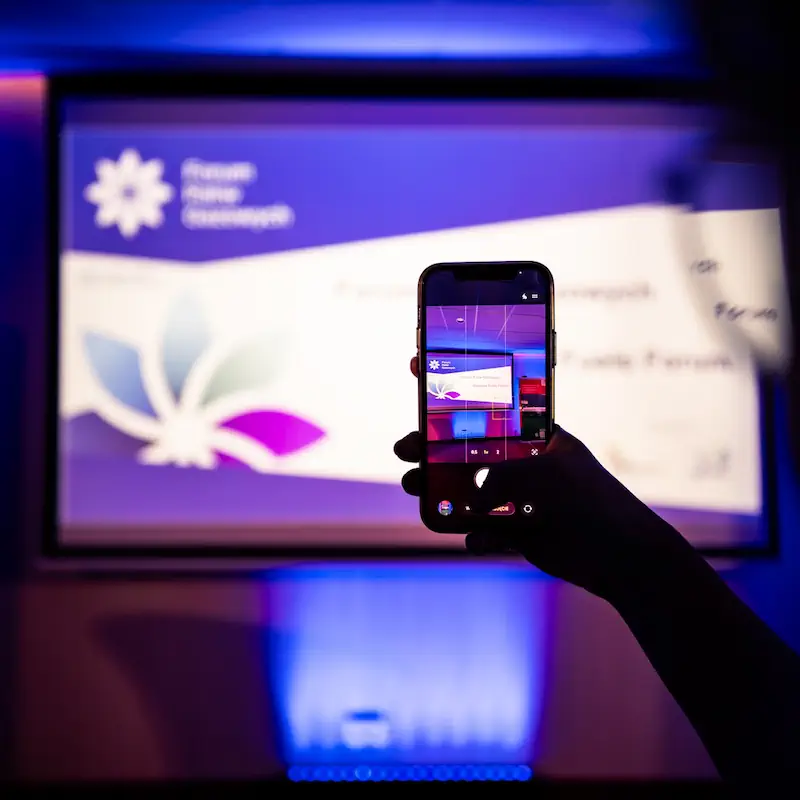
On 20-22 May 2025, the European Liquid Gas Congress, the largest industry event in Europe, was held in Katowice for the first time in Poland. The event was a great achievement for the domestic liquid gas industry and a success for Poland and the Silesian Voivodeship.


The Katowice Congress was attended by more than 1,200 participants from 65 countries, 92 sponsors and exhibitors and 46 speakers, which gave unprecedented scale for the LPG sector. Next to Poland, the best represented countries were Italy, France, Germany, Turkey, UK. United Kingdom, Netherlands, Belgium, USA, Norway and Portugal. There were even delegates from Australia, Oman, Kenya, Peru, Singapore and Malaysia.
The Polish edition of the Congress emphasized the importance of the sector for the Polish economy. The honorary patronage of the event was taken by the Marshal of the Sejm, the Polish Presidency of the Council of the European Union, the Minister of Industry, the Minister of Agriculture, the Marshal of the Silesian Voivodeship, the President of the National Fund for Environmental Protection and Water Management, the President of the Office of Technical Supervision and the Director of Transport Technical Supervision.

On 21 May, the Congress opened Markus Dreier, the new President of Liquid Gas Europe, with a strong message about the need to maintain technological neutrality in Europe's energy transition. Ewa Gawryś-Osińska, President of the Polish Liquid Gas Association and President of Gaspol, also delivered an introductory speech to the delegates of the Congress.
Then Ewa Abramiuk-Lété, General Director of LGE, read a letter from the Marshal of the Sejm of the Republic of Poland Szymon Hołownia to the delegates. In his message, the Marshal emphasized the importance of liquid gas in the affordable transformation of areas difficult to decarbonize — including rural areas — and its role in the fight against energy poverty.
The availability of liquid gas and the possibility of rapid implementation make it not only a means to achieve climate goals, but also a tool to combat energy poverty and social exclusion. It is reachable in areas without developed gas infrastructure. Outside the cities are people who have a harder time accessing cheap, low-carbon energy.
The opening session was also attended by Wojciech Wrochna, Secretary of State at the Ministry of Industry and Krzysztof Bolesta, Secretary of State at the Ministry of Climate and Environment. The ministers unanimously stressed the importance of moving away from the supply of raw materials from Russia in the face of the 3-year aggression against Ukraine, the success of the implementation of the embargo on Russian gas and the flagship initiative of the Polish Presidency in the Council of the European Union, namely the RepowerEU roadmap, which is intended to lead to a complete halt to the import of energy carriers from the Russian Federation. Energy security of the state and solidarity with Ukraine will remain important priorities of Polish policy for the coming years. Krzysztof Bolesta also stressed the important role of renewable gases in sectors difficult to decarbonise in the National Energy and Climate Plan.
At the end of the opening session, Leszek Pietraszek, Deputy Marshal of the Silesian Voivodeship, welcomed the delegates to Katowice and invited them to become involved in the dynamic industrial ecosystem of Silesia.
The most important topics of the Congress from the Polish perspective

One of the leading themes of the Congress was the question of the versatility of LPG in the economy - in particular in the field of heat generation, as well as the transport and agricultural sectors. Discussing individual applications, Congress experts pointed out how the industry can respond to the energy needs of individual niches and support society in the energy transition.
Ireneusz Popiół, CEO of Chemet SA, spoke about the difficult to replace role of gas in the heating of housing stock in the Polish countryside and suburban areas. He also pointed to the return to affordability observed in European energy policy at the current stage of the energy transition. Once the current level of saturation of the system with renewable energy sources is reached, it is necessary to consolidate the achievements of decarbonization and plan the next steps in a way that keeps the costs of the process for citizens in check. Ireneusz Ash quoted the statement of the new Minister of Economy and Energy in Germany, Katherina Reiche, who assessed after taking office that:
the systemic risks and costs of the energy transition (in Germany) have been underestimated and the country needs a review of the energy policy, to adapt the pace of RES expansion to the possibilities of expanding the power grid.

In another panel, Paweł Baraniuk, Vice President of AC SA, presented the role of autogas in road transport in Poland. Poland has become the largest autogas market in Europe despite the lack of state support instruments. The development of the market in Poland contrasts, for example, with Italy, which in 2009-10 offered subsidies for the purchase of cars powered by autogas, and since 2024 has supported the conversion of gasoline engines to LPG with an amount of EUR 400. It was echoed by Simone Casadei from the Innovhub Stazioni Sperimentali per l'Industria Institute in Italy, which conducts research on the environmental impact of motor vehicles. In 17 out of 11 of the analyzed vehicle life cycle criteria, LPG-powered cars are less harmful to the environment than electric cars — although they are inferior to the latter in terms of greenhouse gas emissions. Autogas cars offer the greatest value in terms of reducing emissions of dust, the most important component of smog.
The second day of the Congress began with a session entitled Navigating the Liquid Gas Market in Poland and Central Europe, which was led by Bartosz Kwiatkowski, CEO of POGP. At the introduction to the panel, Bartosz Kwiatkowski read a letter from the President of the National Fund for Environmental Protection and Water Management, Dorota Zawadzkiej-Stępniak.

During the discussion, Szymon Araszkiewicz (Information Market) presented the picture of the Polish market after the entry into force of the embargo on Russian LPG at the threshold of 2025, and Stanislav Batraczenko (ULPGA) presented how the ongoing defense war with Russia has affected the Ukrainian LPG market — in particular in terms of the deterioration of the price ratio of liquid gas to liquid fuels, a decrease in the use of autogas with a simultaneous increase in the cylinder segment. The size of the Ukrainian market has decreased by 40% in 3 years, however, LPG has again shown its value as a strategic fuel useful in humanitarian crises, in areas without efficient energy infrastructure (You can read more about this in the latest publication of the World Liquid Gas Association). In the following part of the discussion, Paweł Bielski (Polski Gaz) discussed the actions of Polish entrepreneurs, which made it possible to prepare for the effects of sanctions, while drawing attention to the challenges still facing the domestic liquid gas market — in particular resulting from regulatory and administrative barriers. Svetoslav Benchev (BPGA) then presented the situation on the sister market to the Polish, Bulgarian market, with a special focus on the transport segment. As in Poland, the development of electromobility in Bulgaria faces a number of cost and infrastructure barriers, which is why autogas has been recognized as an important fuel for decarbonization in the sustainable mobility strategy. Janusz Starościk (SPIUG), on the other hand, faced the issue of misinformation about the alleged ban by the European Union on the use of gas boilers after 2030, as well as the so-called gold-plating of European law, i.e. the way of implementing European law in an overly restrictive way, exceeding the expectations of the European Commission. Such a situation is often encountered in Poland, also regarding the complete withdrawal of the state from subsidizing the installation of gas boilers. SPIUG cooperates with POGP in efforts to neutralize media misinformation about alleged gas bans.
In the session summarizing the Congress, LPG market experts spoke, among others, Chief Economist of Bank Gospodarstwa Krajowego Mateusz Walewski and the head of the climate and energy team of the Polish Economic Institute Kamil Lipiński. They briefly summarized the conclusions of the Congress, including the potential for further use of fuel in the Polish economy.

Among the important topics that emerged in Katowice, it is also worth mentioning the issue of prospects for the development of production and commercialization of renewable liquid gas within the European legal framework, as well as the problem of limited support by Member States for the implementation of clean gas, which would replace imported fossil product. Ewa Abramiuk-Lété presented at the Congress the conclusions of the latest report commissioned by Liquid Gas Europe entitled Outlook for the Production of Renewable Liquid Gases in 2040 and 2050, and Koichi Tanaka presented a demonstration project on the application of renewable dimethyl ether launched in 2021 in Japan and the launched working group formed by the Ministry of Economy, Trade and Industry and the fuel industry. Jordan McCollum of Gas Energy Australia invited interested parties to collaborate on a comprehensive cost analysis project to replace fossil gas with renewable fuel.
The European Liquid Gas Congress in Katowice was accompanied by the celebration of the 80th anniversary of the Tarnobrze-based company Chemet SA, the leading and most modern European manufacturer of pressure vessels and railway tanks for the transport of gases.