TDT: Bezpieczna butla, bezpieczny dom (Safe Cylinder, Safe Home)
15 July 2025
Transport Technical Supervision (TDT) launched an educational campaign in July titled Bezpieczna butla, bezpieczny dom (Safe Cylinder, Safe Home). The Polish Liquefied Gas Organization supports the efforts of TDT to raise awareness among cylinder users. On the basis of the results of the press monitoring carried out by POGP, in 2024 we identified 125 incidents in Poland connected with the use of gas cylinders out of a total of 132 incidents connected with liquefied gas (LPG), that is 93%. The material below comes from the website of Transport Technical Supervision.


Statistics from the State Fire Service show that every year there are more than a hundred explosions of liquefied gas cylinders. These accidents most often occur in multi-family residential buildings and in single-family houses.
The most common cause of a liquefied gas cylinder explosion is improper use, especially the way the cylinder is connected to appliances, followed by a leak in the cylinder or in the installation connected to it. Even a small leak is enough for the gas to escape and form an explosive mixture. In an enclosed room this is a threat to the health, and often the life, of users.
According to the 2024 report on the liquefied gas market presented by the Polish Liquefied Gas Organization, there are approximately 11 million LPG cylinders in Poland, used to supply gas stoves and grills and to heat homes. According to the Ekobarometr 2024 survey, as many as 41% of Poles confirm that they have used liquefied gas (LPG), including 49% of rural residents, 37% of residents of small and medium-sized towns and 33% of residents of large cities. Among LPG users in rural areas, as many as 52% used it to prepare meals, mainly with the popular 11-kilogram cylinders.
In response to these data on the use of LPG cylinders, Transport Technical Supervision, with the support of the Ministry of Infrastructure, has launched the information and education campaign BEZPIECZNA BUTLA – BEZPIECZNY DOM (SAFE CYLINDER – SAFE HOME), whose aim is to increase awareness of the safe use of LPG cylinders and to teach people how to avoid hazards and how to act in line with the technical regulations and safety rules.
YOU PAY – SO DEMAND IT. THIS IS YOUR SAFETY.
Cylinders containing LPG are safe – provided that the basic rules for their use are observed and the cylinder comes from a legal source. The cause of most gas fires or explosions is not the cylinder itself, but its faulty connection to a gas stove, a grill or a heater.
WHAT TO REMEMBER WHEN BUYING A GAS CYLINDER
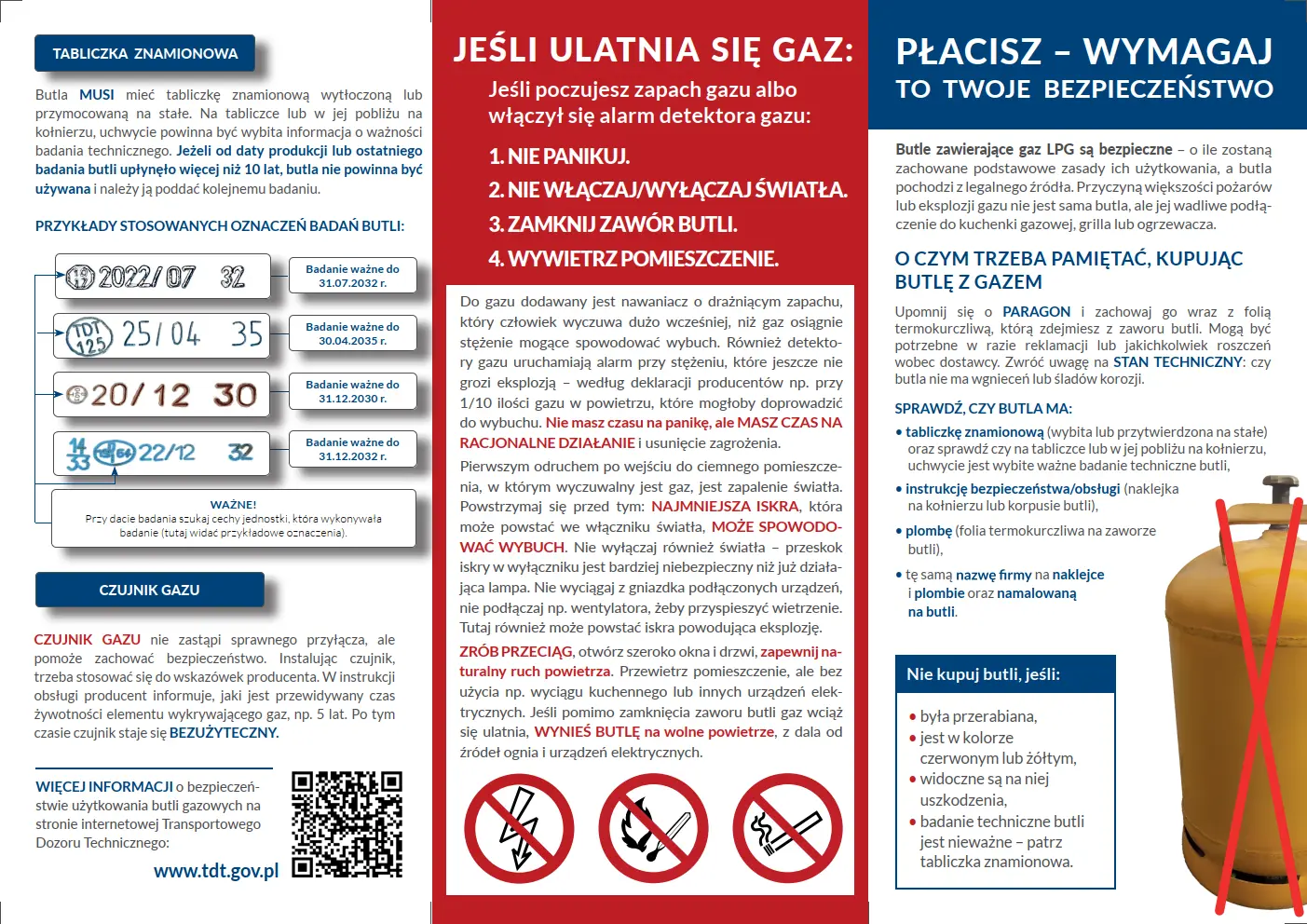
Ask for a RECEIPT and keep it together with the shrink-wrap film that you remove from the cylinder valve. They may be needed in the event of a complaint or any claims against the supplier. Pay attention to the TECHNICAL CONDITION: check whether the cylinder has any dents or traces of corrosion.
CHECK WHETHER THE CYLINDER HAS:
• a nameplate (stamped or permanently attached), and check whether a valid technical inspection of the cylinder is stamped on the nameplate or next to it on the collar or the handle,
• safety/operating instructions (a sticker on the collar or on the body of the cylinder),
• a seal (shrink-wrap film on the cylinder valve),
• the same company name on the sticker and on the seal as the one painted on the cylinder.
Do not buy a cylinder if:
• it is red or yellow,
• damage is visible on it,
• the technical inspection of the cylinder has expired – see the nameplate.
Pay attention to cylinders with a capacity of up to 27 liters that have two welds around the circumference. Such cylinders may be filled with gas in Poland if they were manufactured in accordance with the EN 1442 standard or the EN 14140 standard and are marked with the “π conformity marking”. In that case, make sure that the cylinder with two welds around the circumference carries, for example on the collar, the handles or the foot, the marking of the EN 1442 standard or the EN 14140 standard, the “π conformity marking” and a valid inspection.
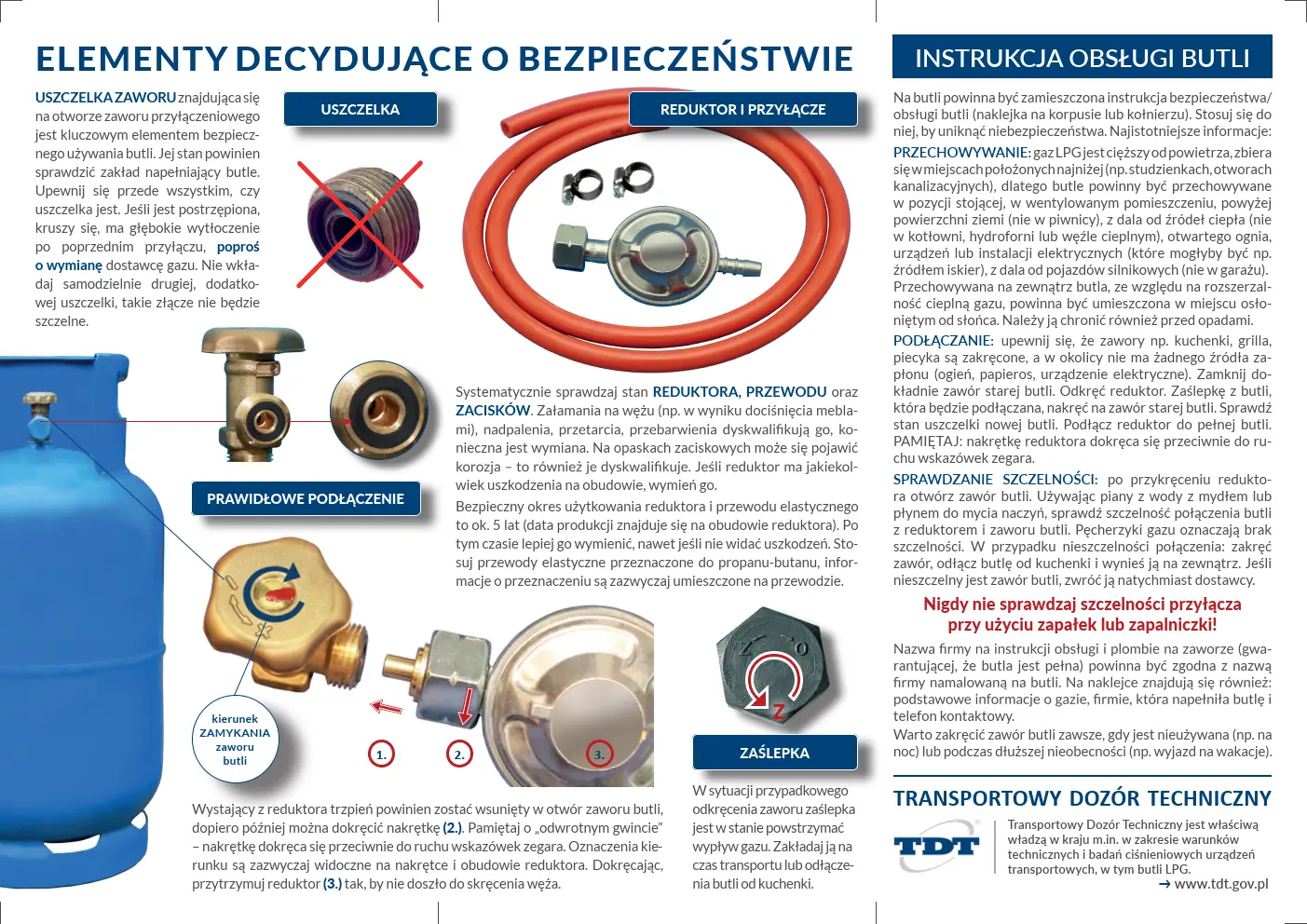
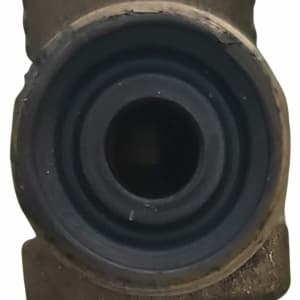
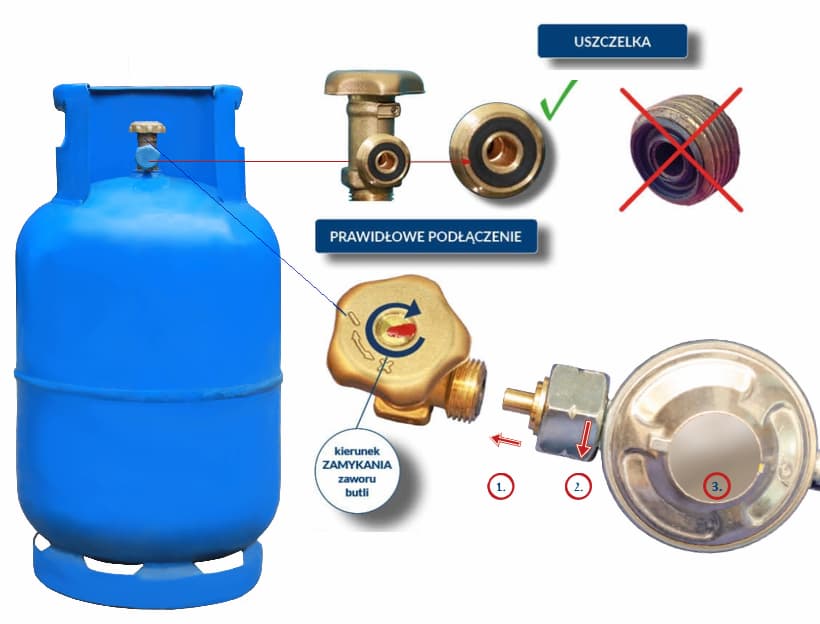
THE VALVE GASKET located in the opening of the connection valve is a key element of the safe use of a cylinder. Its condition should be checked by the plant that fills the cylinders. Above all, make sure that the gasket is there at all. If it is frayed, crumbling or has a deep imprint left by a previous connection, ask for a replacement from the gas supplier. Do not insert a second, additional gasket yourself; such a joint will not be tight.
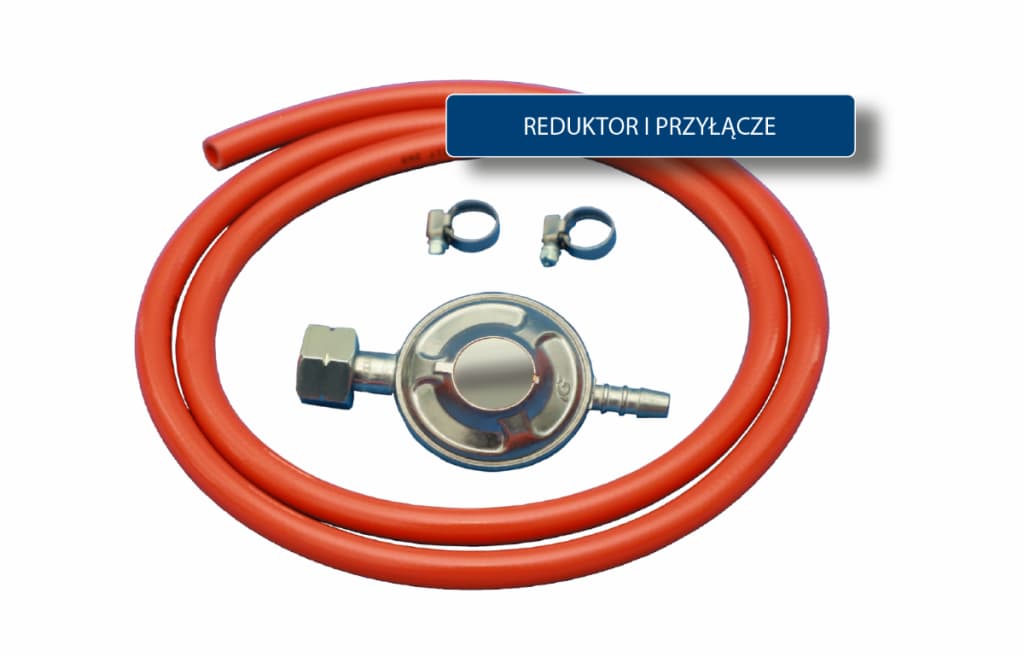
Systematically check the condition of the REGULATOR, THE HOSE and the CLAMPS. Kinks in the hose (for example caused by pressure from furniture), burn marks, abrasions and discoloration disqualify it and it has to be replaced. Corrosion may appear on the hose clamps – this disqualifies them as well. If the regulator has any damage to its housing, replace it.
The stem protruding from the regulator should be inserted into the opening of the cylinder valve, and only then can the nut be tightened (2.). Remember the “reverse thread” – the nut is tightened counterclockwise. The direction markings are usually visible on the nut and on the regulator housing. While tightening, hold the regulator (3.) so that the hose does not become twisted.
The safe service life of a regulator and a flexible hose is about 5 years (the date of manufacture is on the regulator housing). After that time it is better to replace it, even if no damage is visible. Use flexible hoses intended for propane-butane; information about what they are intended for is usually placed on the hose.
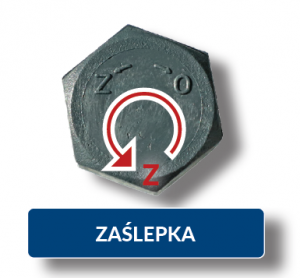
If the valve is opened accidentally, the cap is able to stop the gas from escaping. Fit it for the time of transport or when the cylinder is disconnected from the stove.
THE NAMEPLATE
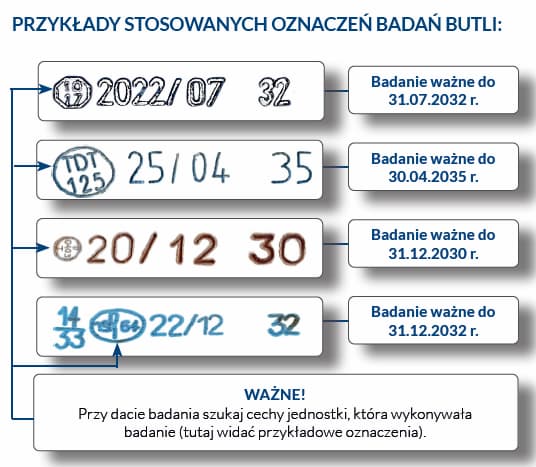
A cylinder MUST have a nameplate that is stamped or permanently attached. On the nameplate or next to it, on the collar or the handle, information about the validity of the technical inspection should be stamped. If more than 10 years have passed since the date of manufacture or since the last inspection of the cylinder, the cylinder should not be used and has to undergo another inspection.
GAS DETECTOR
A GAS DETECTOR will not replace a properly working connection, but it will help to maintain safety. When installing a detector, you have to follow the manufacturer instructions. In the operating manual the manufacturer states the expected service life of the gas-sensing element, for example 5 years. After that time the detector becomes USELESS.
IF GAS IS LEAKING
If you smell gas or the gas detector alarm goes off:
- DO NOT PANIC.
- DO NOT SWITCH THE LIGHT ON OR OFF.
- CLOSE THE CYLINDER VALVE.
- VENTILATE THE ROOM.
An odorant with an irritating smell is added to the gas, and a person detects it much earlier than the gas reaches a concentration that could cause an explosion. Gas detectors also set off an alarm at a concentration that does not yet pose a risk of explosion – according to the manufacturers declarations, for example at 1/10 of the amount of gas in the air that could lead to an explosion. You have no time to panic, but YOU DO HAVE TIME TO ACT RATIONALLY and to remove the hazard.
The first reflex after entering a dark room in which gas can be smelled is to switch on the light.
Resist it: THE SMALLEST SPARK that may occur in the light switch CAN CAUSE AN EXPLOSION. Do not switch the light off either – a spark jumping in the switch is more dangerous than a lamp that is already on. Do not pull connected appliances out of the socket and do not plug in, for example, a fan to speed up ventilation.
Here too a spark that causes an explosion may occur.
CREATE A THROUGH DRAFT, open the windows and doors wide, provide natural air movement. Ventilate the room, but without using, for example, a kitchen extractor hood or other electrical appliances. If the gas is still escaping despite the cylinder valve being closed, TAKE THE CYLINDER OUT into the open air, away from sources of fire and from electrical equipment.
CYLINDER OPERATING INSTRUCTIONS
Safety/operating instructions for the cylinder should be placed on it (a sticker on the body or on the collar). Follow them in order to avoid danger. The most important information:
STORAGE: LPG is heavier than air and collects in the lowest-lying places (for example drainage wells or sewer openings), which is why cylinders should be stored upright, in a ventilated room, above ground level (not in a cellar), away from sources of heat (not in a boiler room, a pump room or a heat exchanger station), away from open fire and from electrical equipment or installations (which could be, for example, a source of sparks), and away from motor vehicles (not in a garage).
Because of the thermal expansion of the gas, a cylinder stored outdoors should be placed in a spot shielded from the sun. It should also be protected against precipitation.
CONNECTING: make sure that the valves of, for example, the stove, the grill or the heater are closed and that there is no source of ignition nearby (fire, a cigarette, an electrical appliance). Close the valve of the old cylinder tightly. Unscrew the regulator. Screw the cap taken from the cylinder that is to be connected onto the valve of the old cylinder. Check the condition of the gasket of the new cylinder. Connect the regulator to the full cylinder. REMEMBER: the regulator nut is tightened counterclockwise.
CHECKING FOR LEAKS: after screwing on the regulator, open the cylinder valve. Using foam made of water with soap or dishwashing liquid, check the tightness of the connection between the cylinder and the regulator and of the cylinder valve. Gas bubbles mean a lack of tightness. If the connection is leaking: close the valve, disconnect the cylinder from the stove and take it outside. If the cylinder valve is leaking, return the cylinder to the supplier immediately.
Never check the tightness of the connection using matches or a lighter!
The company name on the operating instructions and on the seal on the valve (which guarantees that the cylinder is full) should be consistent with the company name painted on the cylinder. The sticker also contains basic information about the gas, about the company that filled the cylinder and a contact telephone number.
It is worth closing the cylinder valve whenever it is not in use (for example for the night) or during a longer absence (for example a vacation).
Text source: Transport Technical Supervision
More information for users of liquefied gas (LPG) can also be found on the POGP website.