Gas cylinders in apartment buildings
1 July 2026
What are the rules on using gas cylinders in multi-story buildings? We explain them and encourage everyone to follow the rules for the safe use of cylinders - in particular, never to fill a cylinder above 80% of its capacity.

The rules governing the use of gas cylinders in buildings were adopted 24 years ago. Last winter, however, rumors about a "ban on gas cylinders in buildings" came back to life.
The source of the rumor
In November 2025, at the start of the last heating season, the management board of the Zakopiańska Spółdzielnia Mieszkaniowa (the Zakopane Housing Cooperative) sent residents an Information notice on the use of propane-butane gas cylinders in buildings. The material published on the cooperative’s website contains the following wording:
The management board of the Zakopiańska Spółdzielnia Mieszkaniowa reminds residents that, in accordance with § 157(5) of the Regulation (…), in multi-family buildings with more than four above-ground stories the use of gas cylinders containing liquefied gas (propane–butane) to supply cookers or other gas appliances is prohibited. Pursuant to § 157(5) of the cited regulation, the use of a gas cylinder constitutes a breach of building and fire safety regulations, as well as a direct threat to the life and health of all residents.
The use of LPG cylinders in buildings is governed by the Regulation of the Minister of Infrastructure on the technical conditions to be met by buildings and their location (hereinafter: the Regulation). The Regulation was adopted on 12 April 2002 and, although it has been amended many times since then, from the outset it has governed the use of liquefied gas (LPG) in multi-story buildings. The steps taken by the Zakopiańska Spółdzielnia Mieszkaniowa and by other local authorities are part of educating the public about the safe use of gas cylinders.
What do the regulations say about gas cylinders in multi-story buildings?
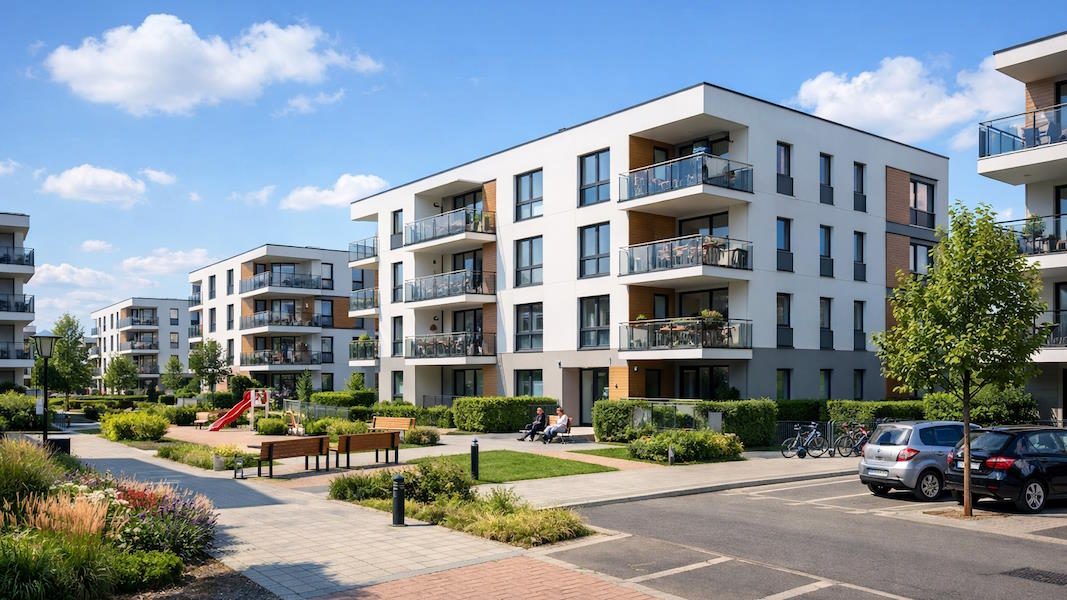
The whole of Chapter 7 of the Regulation governs gas installations – including cylinders – in buildings, and a clear distinction has to be drawn between liquefied gas and mains gas.
For safety reasons, installations supplied with liquefied gas (LPG) may be used only in low-rise buildings, that is, buildings no taller than 12 m and no higher than 4 above-ground stories.
As a rule, it is not permissible to have two gas installations in a single building, one of them supplied with liquefied gas and the other with mains gas. It is permissible for a low-rise building to have a boiler room supplied with natural gas and liquefied gas installations – for example cookers – in the apartments. In buildings taller than 4 stories, the use of gas cylinders was and still is unconditionally prohibited.
In buildings where the use of gas cylinders is permitted, it is important to remember the rules for the safe use of gas cylinders:
1. No more than two 11 kg cylinders may be kept in a single dwelling.
2. In a room where a cylinder is located, the temperature must not exceed 35°C – because of the risk of the gas expanding and the cylinder rupturing.
3. Cylinders must be installed in an upright position only.
4. Cylinders must be protected against mechanical damage.
5. Cylinders should be kept at least 1.5 m away from any heat source and at least 1 m away from equipment that generates sparks.
The rules on the use of gas cylinders in buildings have remained unchanged for years. In practice, they are used above all in single-family houses or small multi-family buildings – where it was not possible to build a connection to the gas grid.
Safety first
Liquefied gas is an efficient, convenient and low-emission fuel. Neither propane nor butane is a greenhouse gas. When burned, they produce no particulate emissions, which improves air quality compared with appliances using solid fuels such as coal or wood.
Gas is also a safe fuel - provided that a few basic rules are followed. Just as with cars, a gas installation in the home should undergo regular inspections.
Propane and butane are heavier than air, which means that in the event of a leak the gas will collect at floor level. That is why gas cylinders must not be used in rooms where the floor is below ground level – including cellars.
Statistics from the State Fire Service show that every year there are more than a hundred accidents involving liquefied gas cylinders. Their most common cause is improper use, especially connecting a cylinder to an appliance, and further down the list – a leak in a cooker, a heater or the seals of a domestic installation, and sometimes in the cylinder itself, usually bought from a dubious source. For safety reasons, a special, strongly odorous substance – mercaptan – is added to LPG. If you smell the characteristic sulfurous odor, compared to rotting cabbage:
1. Do not panic.
2. Do not switch the lights on or off.
3. Close the cylinder valve.
4. Ventilate the room.
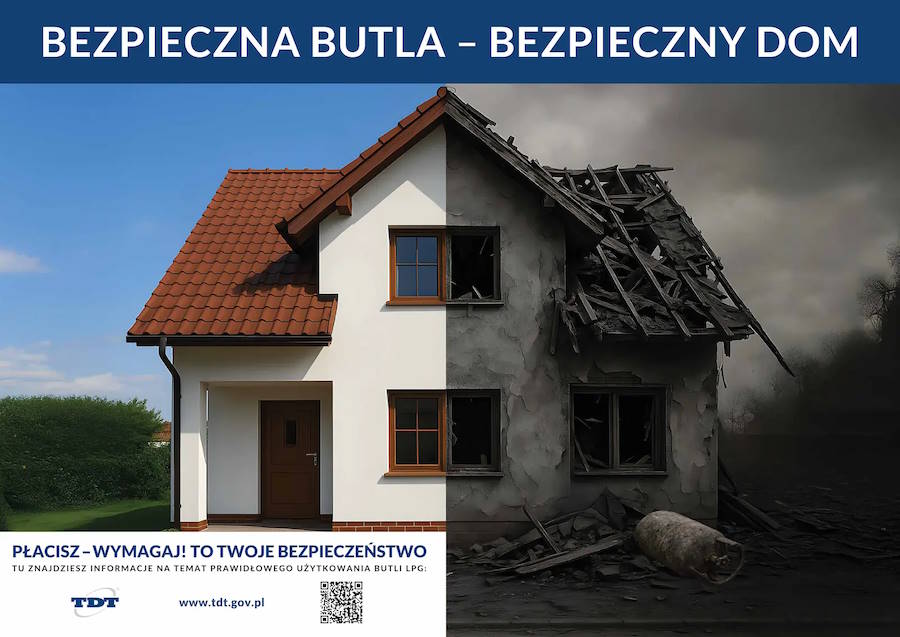
In 2025 Transport Technical Supervision, the body responsible for overseeing the safety of cylinders, prepared a campaign entitled Bezpieczna butla, bezpieczny dom (Safe cylinder, safe home). We encourage you to read its recommendations.
The provisions of the Regulation are no substitute for elementary knowledge and common sense.
The 2026 heat wave
The record high temperatures recorded in June 2026, combined with cases of improper use of LPG cylinders, were the cause of incidents reported in various parts of the country. We therefore recall the most important rules for the safe use of LPG cylinders in hot weather:
- never fill a cylinder above 80% of its capacity! By using authorized cylinder exchange and filling points, the user can be certain that the cylinder has been filled in line with the applicable safety requirements - including without overfilling. Overfilling a cylinder, especially in high temperatures, may lead to an excessive rise in pressure and, in extreme cases, to the cylinder rupturing.
- never leave a disconnected cylinder standing in the sun! Under the Regulation, cylinders should not be kept at temperatures higher than 35 degrees Celsius.
- never use a gas grill on a balcony in buildings taller than 4 stories! Housing communities may impose additional restrictions on the use of appliances of this type on their property.
The rules for the safe use of LPG cylinders are worth repeating. Every year in Poland there are more than 100 incidents involving LPG cylinders, the vast majority of which are a consequence of improper use of a cylinder or of using a cylinder of unknown origin. According to the findings of the recent Ekobarometr 2026 public opinion survey, when buying gas in cylinders Poles are still guided almost exclusively by price, paying less attention to safety and to the choice of authorized points of sale and cylinder exchange.