Ekobarometr 2026: Generation Y are the biggest fans of LPG
17 June 2026
The SW Research Market and Opinion Research Agency has published the results of the 8th edition of the Ekobarometr survey. The Polish Liquefied Gas Organization was a knowledge partner of this research project for the third time. The results of the new edition prove that Poles maintain a positive opinion of the role of liquefied gas in protecting air quality, in both the heating and the transport segments.


The latest edition of the survey confirms a pattern already seen in previous years: older Poles are far more idealistic about environmental and climate issues than young people. Joanna Nowakowska, an expert at WPP Media, comments as follows:
For 8 in 10 baby boomers (aged 60+), it matters that the products they buy are made with respect for the environment. Among Gen Zers, fewer than 6 in 10 feel that way. For 75% of people over 60, it matters that manufacturers get involved in protecting the environment. Among Gen Zers, again fewer than 60%. (...) The gap is even wider when it comes to plastic – almost every second 60-year-old would support an outright ban on its use in packaging, while among Gen Zers fewer than 30% back the idea.
The examples could be multiplied, because the youngest generation’s distance from the noble idea of sustainable development is visible in almost every dimension we measure. Gen Z is today a painfully pragmatic generation that values hard cash, its own convenience and a quiet life. In their declarations, saving the planet often loses out to a cheap T-shirt and free delivery from China.
Among the 1,500 Poles surveyed in 2026 as part of the Ekobarometr study, liquefied gas (LPG) is most popular with Generation Y, that is people born between 1980 and 1996. It is in this age group that the largest number of people use autogas and - alongside the postwar generation (today’s 60-somethings!) - LPG cylinders for recreational purposes, for example at allotments, in campervans or in gas grills.
Price decides the popularity of autogas
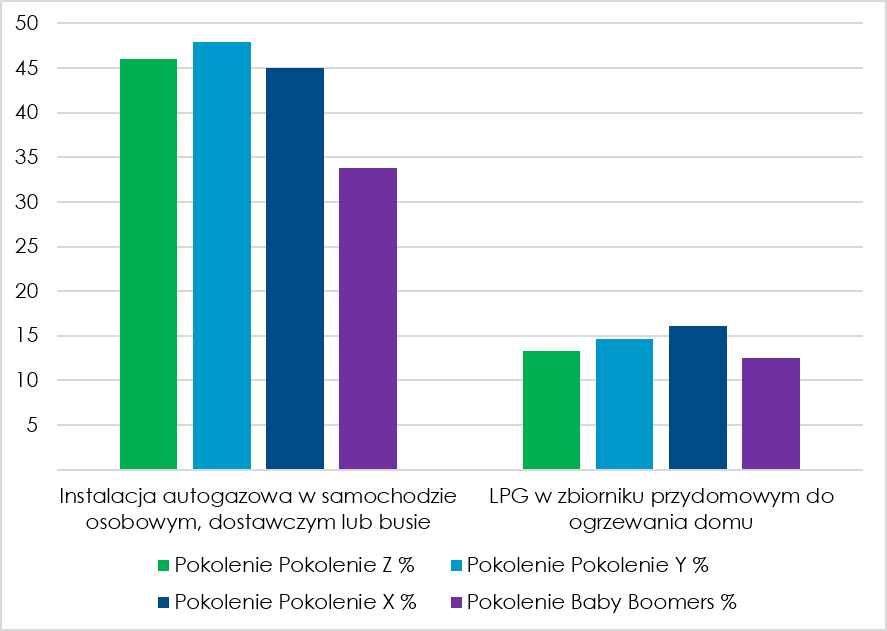
Close to 44% of all LPG users in Poland drive LPG-powered cars, which account for around 13% of all registered vehicles in Poland. Autogas is used widely in Poland: the largest number of gas-powered car users is found among representatives of Generation Y (47.9%), but Generation Z (46%) and Generation X (45%) are not far behind. Among the oldest Poles these vehicles are the least popular - this year’s survey indicates that only one-third of LPG users in that age category run their cars on gas.
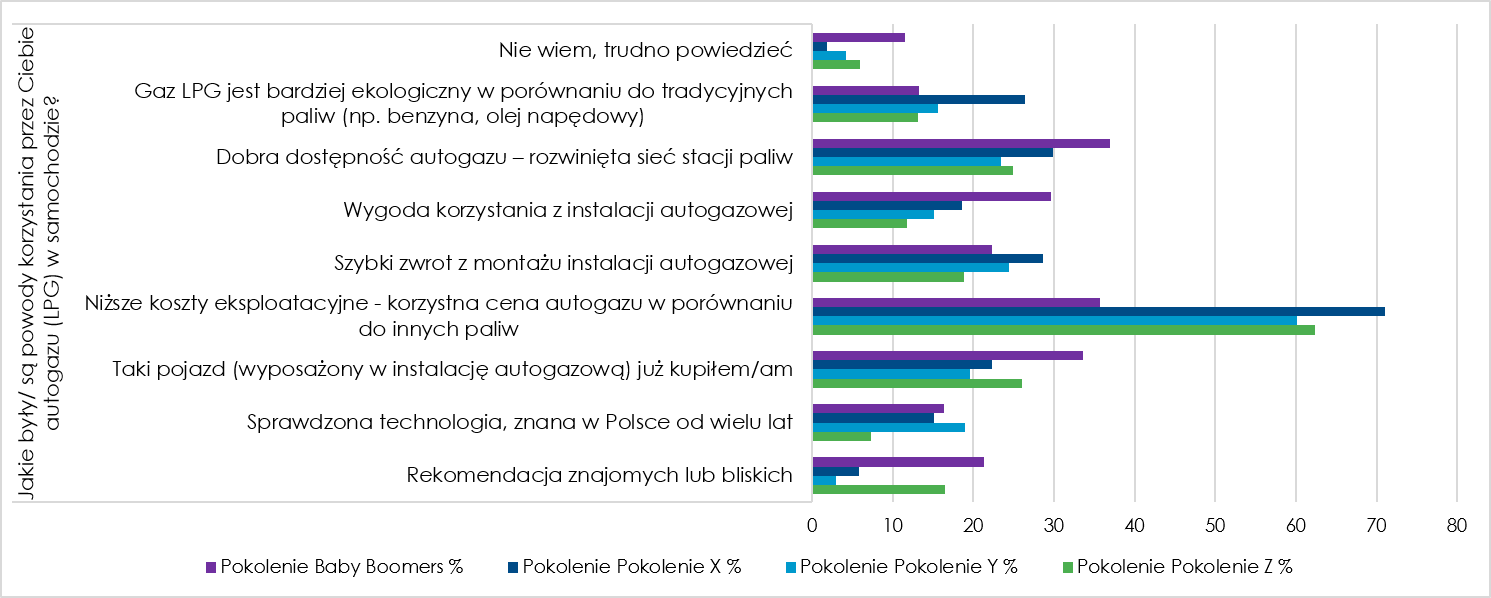
Generation Y is the most strongly represented group among autogas users, and for it price remains the most important selection criterion. It is widely regarded as the greatest advantage of autogas - as many as 59.1% of the users of such cars were guided precisely by cost. LPG remains an important social fuel for less affluent people.
Users of gas-powered cars also point to other merits of this fuel, in particular the well-developed network of stations (27.9% of responses), but by far the most important reason for using autogas is economic. Among Generation X, that is people still raised in the Polish People’s Republic and coming of age in the 1990s, as many as 71.1% of users highlight the attractive price of autogas, and 28.7% the quick payback on the LPG conversion system. Among younger drivers the share citing price is slightly lower, at 60-62%. The oldest users stand apart from this picture: the postwar generation pays the greatest attention to the widespread availability of autogas at filling stations (36.9%).
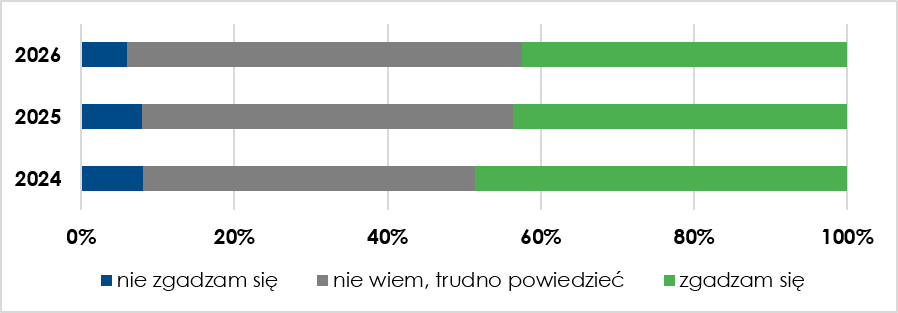
Gas-powered cars are still more attractive than "electrics". Asked whether "it is more likely that my next car will be powered by autogas than by electricity", 29.3% of respondents choose LPG and 16.4% electricity, and these figures are similar to last year’s. The biggest difference is among representatives of Generation Y: 34.2% point to autogas and 13.9% to BEVs. At the same time, the growing popularity of hybrid cars in Poland and the dominant financial motivation behind buying gas-powered cars indicate a long-term trend: the number of cars using autogas will decline over the coming decades, which has been visible in the data of the Central Vehicle Register since 2022. The number of such vehicles in Poland is falling by an average of 2.3% a year. Faced with the intensive promotion of electric propulsion, Poles are also beginning to hesitate about the environmental impact of LPG cars. In 2026, for the first time, the share of people unsure how to answer the question "Does using autogas in cars help improve air quality and reduce smog" exceeded half (51.6%), against 42.5% positive answers. As in the previous year, close to 50% are still of the view that gas-powered cars should be allowed to enter Clean Transport Zones. Fewer than 6% of Poles take the opposite view.
More about the profile of autogas users in Poland can be found in our analysis of last year’s edition of Ekobarometr.
Growing popularity of LPG heating thanks to convenience
More than 14% of LPG users in Poland already use gas heating from a domestic tank, and according to data from the Office of Technical Inspection (UDT) the number of such tanks is growing by close to 10% a year. Data collected since 2024 indicate an upward trend as Poles replace old coal-fired boilers that fail to meet environmental standards.
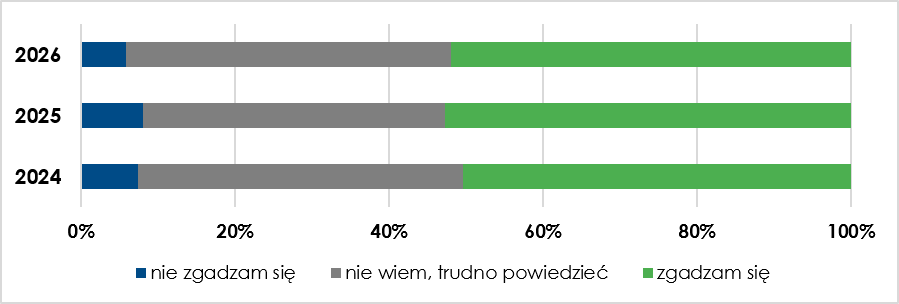
51.9% of Poles agree that replacing old, high-emission coal boilers (known in Poland as „kopciuchy”) with gas boilers helps improve air quality, and this is a result similar to the previous year. Indeed, the use of gas boilers makes it possible to eliminate emissions of particulates, which are the basic component of smog. When financial support for gas boilers was removed from the Clean Air program in 2025, it met with disappointment among Poles that persists to this day. In this year’s survey, 52.3% of respondents took the view that boilers should continue to be co-financed from public funds – 0.8 percentage points more than in the previous year. We wrote about the role of gas heating in the fight against smog in a recent article, following a joint press conference with the Association of Manufacturers and Importers of Heating Appliances.
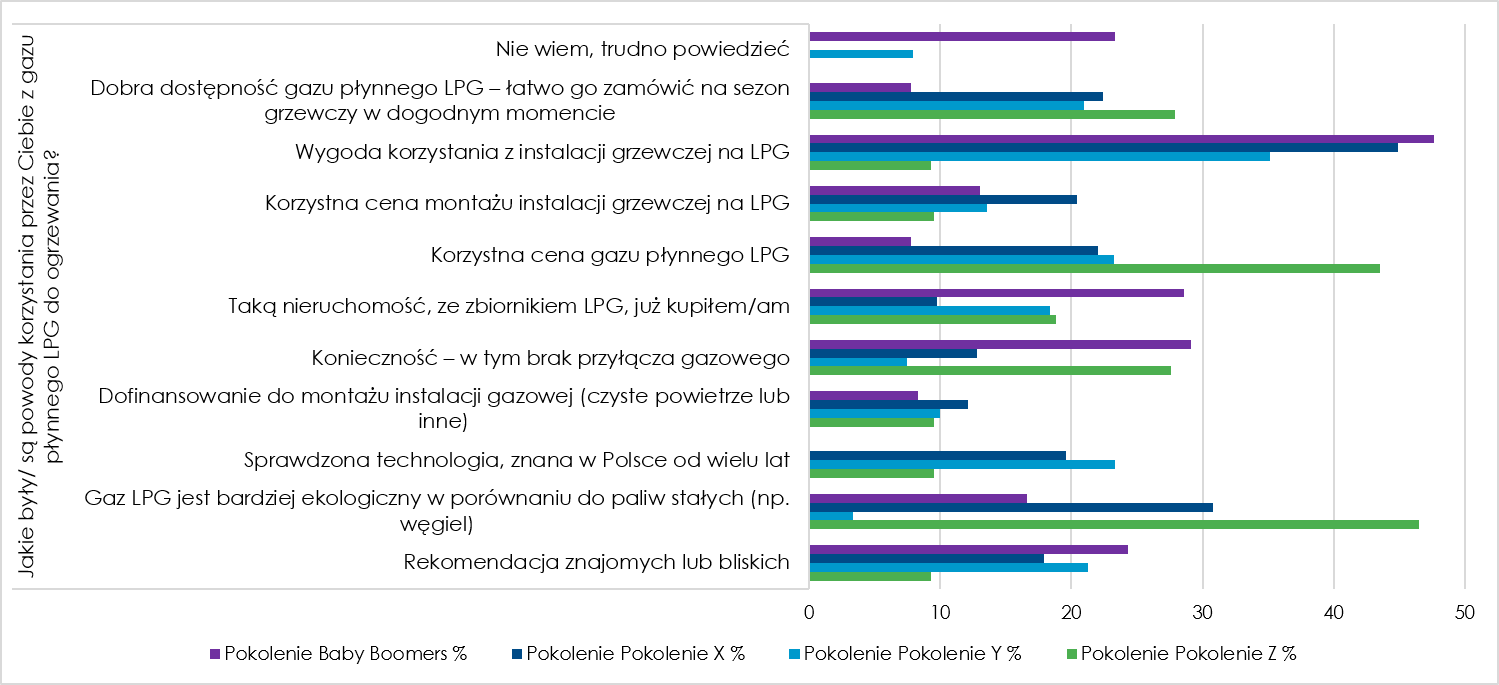
For users of LPG heating installations the most important feature of this fuel is convenience – gas boilers are maintenance-free and require neither a fuel store nor loading by the owner, as is the case with solid fuels. This factor is cited by 37.1% of respondents - more than the price of LPG (22.5%), the environmental merits of the gas (20.3%) or easy access to LPG suppliers (19.6%).
In this case the element of convenience matters least to the youngest respondents: for representatives of Generation Z, who have probably had less contact with traditional boiler rooms in the past, the convenience of using gas accounts for about 9% of responses. For the youngest, what matters most is the relatively low cost of heating with propane and the environmental merits of the gas. Among older respondents, not having to load fuel by hand plays the decisive role, and price is secondary.
These results are confirmed by another Ekobarometr question, about the features of a heating system that are most important to the user. 75% of Poles rate reliability as an important or very important feature of a heating system, 73% low operating costs and 71% a low initial investment cost.
15.7% of respondents say they would choose LPG heating if they were building a house in an area without access to the gas grid. The same number of Poles choose pellets (15.6%), and more, 27.1%, a heat pump. The largest group of respondents (29.3%) is unable to say which heat source would be optimal.
As in previous years, 48.6% of Poles maintain that LPG is a good heating solution for areas without access to gas pipelines or district heating, while 4% take the opposite view.
Poles are also thinking about situations in which the chosen heat source may not be sufficient to heat the house - for example in the event of a grid failure or low temperatures. 43% of respondents are worried or very worried about such a risk.
LPG cylinders: perception versus reality
Improper handling of LPG cylinders accounts for over 95% of liquefied gas incidents in Poland - some 120-130 a year. We have written about cylinder safety in the past, and in 2025 Transport Technical Supervision ran an information campaign on the matter. In the 8th edition of Ekobarometr we put a series of questions to Poles designed to examine their knowledge of how to handle gas cylinders.
Poles who confirmed that they had used LPG gas cylinders declare that they pay attention above all to physical damage to the cylinders they buy (over three-quarters answered "I pay attention to a large or very large extent") and to the question of convenience (ease of connection, weight of the cylinder). These factors are more important to women than to men - respondents’ answers show that men less often analyze the technical condition of a cylinder before making a purchase. For women, on the other hand, the weight of the cylinder is a far more significant factor, noted by more than 60% of female customers.
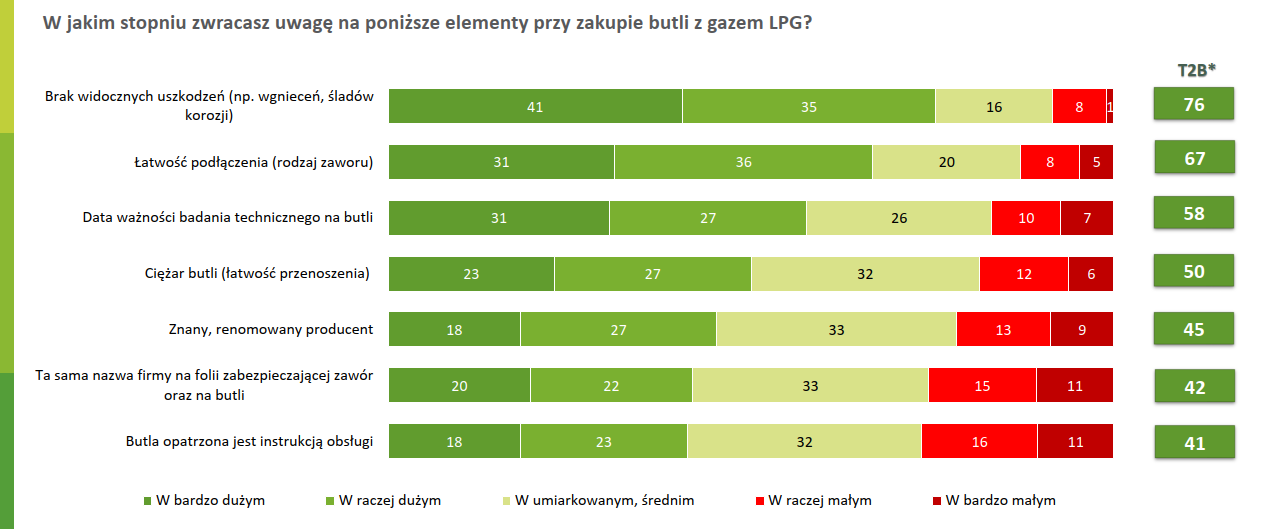
Cylinder users pay far less attention to information about the gas supplier, including the name on the cylinder or the print on the film securing the valve. About 10% of customers - including 11.5% of men - declare that when buying gas in a cylinder they are guided solely by price, paying no attention even to the technical condition of the cylinder itself.
Poles still have difficulty distinguishing liquefied gas (LPG) from natural gas. Only 36% of respondents answered correctly the question of whether these substances differ from each other, and 60% were unable to give an answer. When their ability to distinguish the gases was verified, only 4.7% of respondents demonstrated that they understand the differences between them. This lack of knowledge may generate risks, because the physical properties of the two gases are different – this is why, for example, gas cylinders may not be stored below ground level or used in buildings taller than four stories.
The full report from the Ekobarometr 8 survey by the SW Research agency is available here.