CPN, or Omitted Fuel Price
2.4.2026
The CPN package, passed expressly on March 27-28, bypassed LPG users. The price of the Omitted Fuel will be covered by 3 million drivers in Poland from their own pockets.

LPG is the third most important transport fuel in Poland after petrol and diesel with a share 8.4% in sales structure. The Polish market is the largest autogas market in the European Union — according to the POGP Annual Report of 2024, LPG powered cars are 13.4% of the entire fleet of passenger cars in Poland. According to the Central Register of Vehicles, 3.2 million cars powered by autogas were registered in Poland in 2025, and according to the Central Vehicle Register, 2.47 million are actively used cars.
According to the results of the Ecobarometer 2025 survey of the SW Research agency up to 18.5% of Poles has had the opportunity to drive such a car over the past three years, with vehicles with an autogas installation being the most popular in medium-sized cities. According to an older survey from 2023, the largest group of autogas users were people with declared incomes not exceeding PLN 4,000 per month, i.e. earning below the national average. LPG has historically been regarded as a social fuel, used by the less fortunate.
- Bringing petrol and diesel to a reduced VAT rate, and at the same time excluding autogas from it, means that smaller towns and lower-income earners are omitted from solutions to protect the market from the effects of the Gulf War. It is incomprehensible why they should bear the brunt of the current crisis. - commenting Bartosz Kwiatkowski, Director General of the Polish Liquid Gas Association (POGP).
Tadusz Ozarowski, Chairman of the Coalition for Autogas -Union of Employers, adds:
- The omission of autogas in the CPN package is a decision that can hardly be considered rational - both from the perspective of the fuel market and social policy. We are talking about fuel, which is used by several million drivers in Poland, often belonging to the groups most sensitive to the increase in the cost of living. In practice, this means that the burden of the current crisis has been shifted to them. All the more surprising is the departure from the solutions used during the previous energy crisis, when autogas was included in the VAT reduction. Today, with even greater market disturbances and a dynamic rise in LPG prices, the absence of an analogous mechanism means a real risk that autogas will exceed price levels, which for many users will become an unacceptable barrier.

During the energy crisis of 2021, the government adopted the so-called Anti-Inflation Shield, which assumes very similar solutions to the currently implemented package. Shield 1.0 included a reduction in excise duty, and Shield 2.0, adopted in February 2022 — also VAT on LPG used for transport purposes.
In retrospect, we know that the budgetary impact of the VAT reduction on autogas was negligible. According to the WiseEuropa Institute, VAT receipts on LPG despite a reduced rate of up to 8% amounted to PLN 2.4 billion in 2022 and were a record in history. This was due to the higher price of LPG per year. A similar situation is happening now — in the month since the beginning of the Gulf crisis, retail autogas prices have risen by 1/3.
According to e-petrol.pl data, on February 25, 2026, the retail price of autogas amounted to PLN 2.77/l, to rise to PLN 3.64/l by March 25, 2026, i.e. by 87 gr. Prices forecast for the Christmas week reach up to PLN 3.86 per liter, which would set a new record.
For comparison, the average price of autogas at the end of 2021 was 3.32 PLN/l, and in March 2022 it jumped to 3.79 PLN/l. The entry into force of the Shield 2.0 made it possible to keep the price of autogas below the psychological level of 4 PLN/l.
What differentiates the crises of 2021/2022 and 2026 is that we are currently facing a real limitation of about ¼ of the availability of LPG on the world market due to the closure of the Strait of Hormuz. After the invasion of Ukraine, there was no supply constraint — only the uncertainty associated with the risk of supply halting. - commenting Bartosz Kwiatkowski, General Director of the Polish Liquid Gas Association (POGP) . — Without a temporary reduction in VAT rates, the current government can be remembered as the first in history for which the price of autogas will exceed PLN 4/l. This will be the Price of the Omitted Drive.
Also, the Coalition for Autogas calls for an urgent correction of the regulations and the inclusion of LPG with protective measures in the form of a VAT reduction. According to its representatives, the current decision may undermine the sense of regulatory stability among market participants, as well as contradict the current practice and logic of consumer support in crisis situations.
Appeal to the Prime Minister of the Republic of Poland
On April 2, 2026, the Polish Liquid Gas Association asked the Prime Minister of the Republic of Poland Donald Tusk with a request to include autogas at a reduced VAT rate. According to market data, on 24 February this year, the wholesale price of propane at Baltic sea terminals amounted to PLN 2900/t, and propane-butane mixtures - PLN 3700. During the month, March 24, the price of propane in Polish ports rose to 4368 PLN/t (by 50.1%), and blends — to 5165 PLN/t (by 39.6%). The retail price of autogas at petrol stations according to the e-petrol.pl portal increased from 2.77 PLN/L on 25 February to 3.69 PLN/l on 1 April, i.e. by 33%.
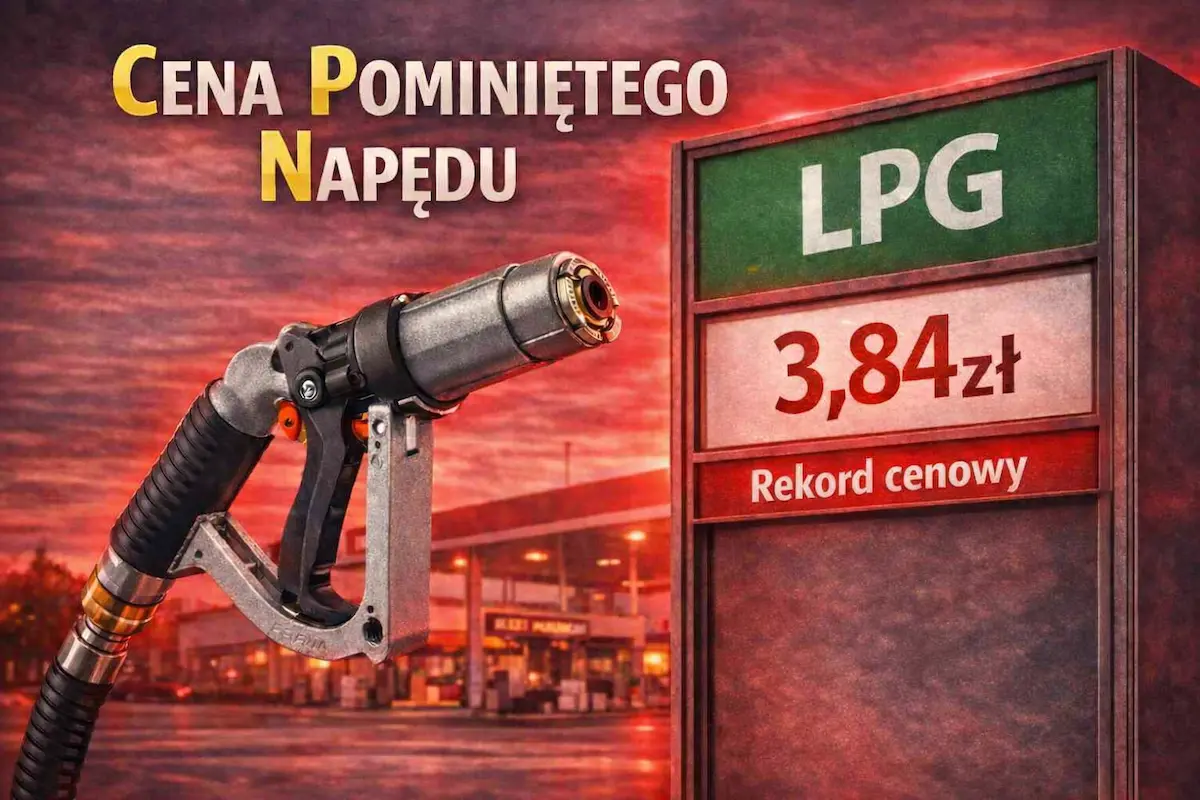
After Easter, the price of autogas rose again. According to the data at the end of April 2026, the highest ever average level of autogas prices in Poland was reached in the week from April 9 - the price then reached PLN 3.84 /l, beating the previous record recorded in March 2022, after the start of the full-scale invasion of Ukraine, and amounted to PLN 3.79 /l.
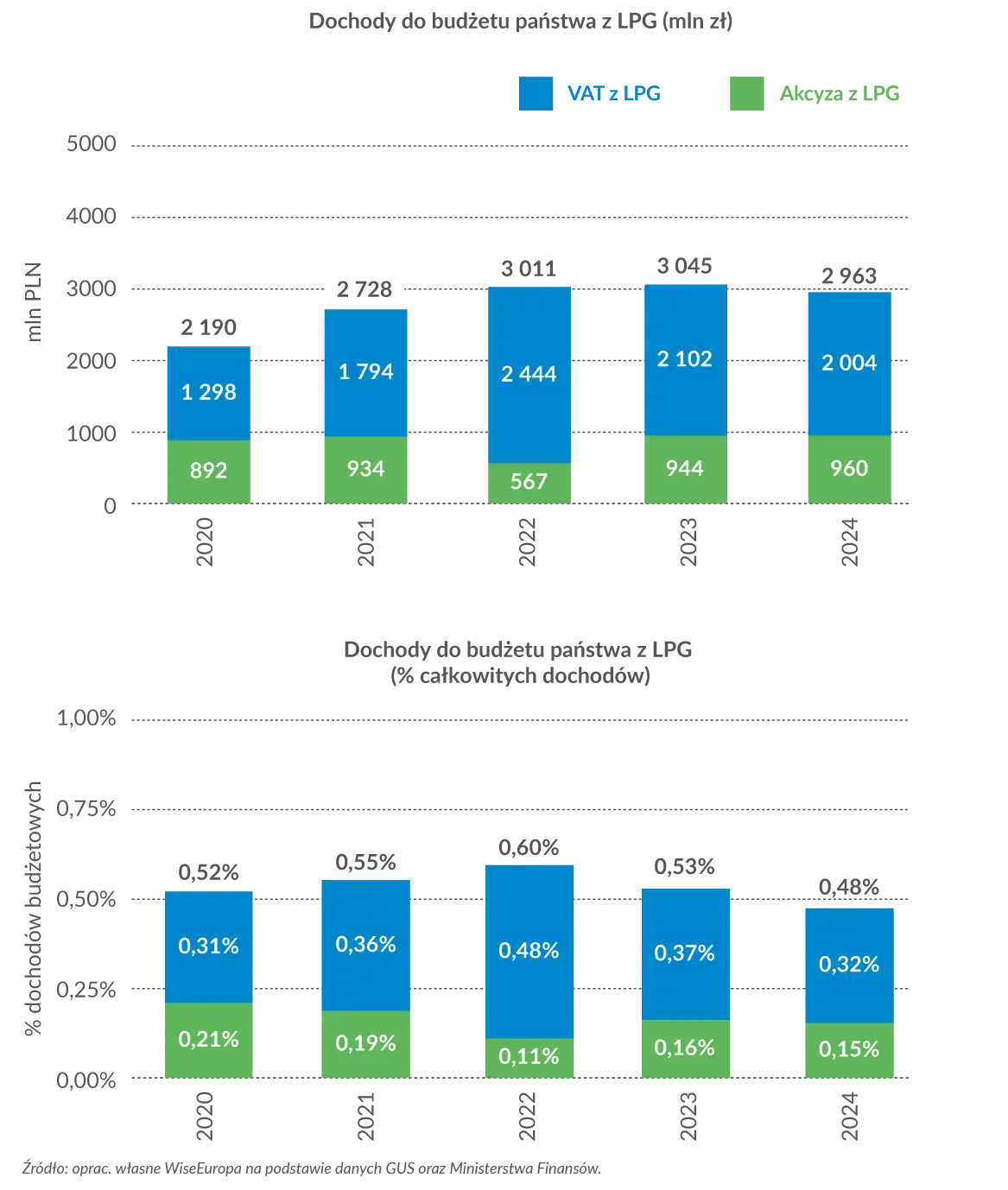
In February this year, WiseEuropa conducted an analysis of the tax revenues generated by the LPG industry. Details can be found in the report. LPG industry: Role and importance in the Polish economy. According to WiseEuropa, VAT revenues from LPG amounted to PLN 2 billion in 2024, and in 2022. despite the reduced rate of VAT — exceeded PLN 2.4 billion (0.48% of total revenues), reaching a record level. This was due to the higher price of LPG per year. A similar situation occurs as a result of the blockade of the Strait of Hormuz.
An increase in retail prices automatically translates into an increase in budget revenues from VAT. According to POGP estimates, higher fuel prices will continue for a minimum of 1 quarter, and possibly for 2 quarters. In this situation, the temporary reduction of the VAT rate from 23% to 8% for a period of several months will not pose a serious burden on the state budget for 2026, as it will be largely offset by higher retail prices.
The importance of LPG in transport remains consistent with its utility and cost profiles — as an alternative fuel to petrol, available to a wide range of users. Historically, autogas has been a social fuel in Poland and other Central European countries. On average, the cost of 1 liter of LPG in 2025 corresponded to 48.5% of the cost of 1 liter of gasoline. A year earlier, it was 45.6%. After the entry into force of the CPN package, according to data on April 22, this proportion was 64.5% - for autogas users the signal was that they had been left out of consumer protection measures.
The deterioration in the ratio of LPG to gasoline prices has a negative impact on Polish entrepreneurs supplying autogas systems to passenger cars: when approaching the 60% threshold, customers abandon assembly due to the lengthening payback period. Selective state intervention in the fuel market has harmed domestic producers and installers.
upgrade
10 April Undersecretary of State at the Ministry of Finance, Yaroslav Neneman, responded to POGP's letter:
In the opinion of the Ministry of Finance, in the period prior to the introduction of the CPN programme, the increase in the price of LPG in nominal terms was less than the corresponding increase in the price of petrol and diesel. In addition, still the price of LPG is significantly lower and competitive with respect to gasoline and diesel. An important consequence of extending the scope of preferences for LPG gas would be a reduction in budgetary revenues, e.g. from VAT.
The full text of Deputy Minister Neneman's response can be found in the appendix below.