Polish LPG in 2025: a revolution in supply
24.4.2026
Polish Liquid Gas Association (POGP) presented its Annual Report for 2025. The share of imported gas from Russia fell in the year from 44% to 13%, and the largest suppliers are now Sweden, the USA and Norway. The most promising market for liquefied gas is the segment of municipal heating. The number of backyard reservoirs is growing at a rate of 10% per year. However, the foundation of the market remains autogas, which accounts for 73% of LPG consumption in Poland. According to the European Automobile Manufacturers Association ACEA, the number of vehicles registered in Poland powered by autogas is 30 times higher than the number of electric cars (BEVs).

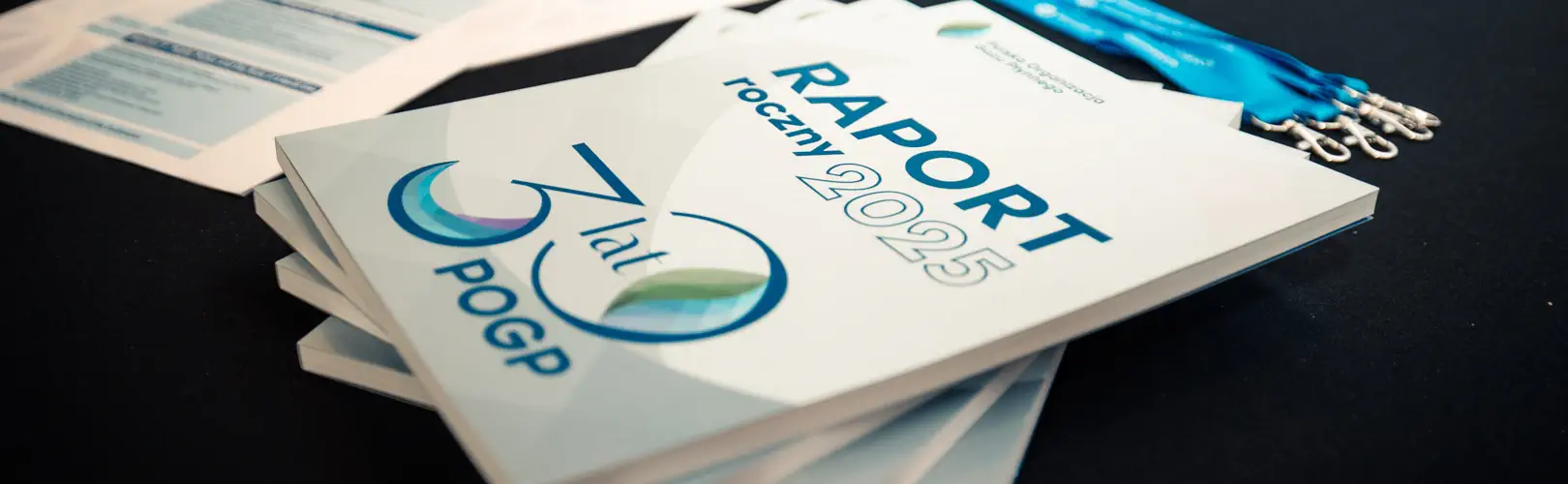
The POGP Annual Report for 2025 was presented on April 23, 2026 at 3rd Gas Fuels Forum in Warsaw.
The past year was a period of unprecedented changes for the industry associated with the entry into force of sanctions on imports of liquefied gas from Russia and the need to diversify the directions of supply. For the first time in history, most of the volume of LPG coming to Poland came from western directions, and the market — despite initial concerns — maintained stability and continuity of supply.
In 2025, the consumption of LPG in Poland amounted to 2.45 million tons, which meant a slight increase of 0.2% y/y. Domestic production covers 18.4% of demand, while imports secure the remainder. Deliveries from Russia fell from 1.1 million tonnes in 2024 to 300,000 tonnes in 2025, and their share of imports to Poland decreased from over 44% to 12.6%. At the same time, the role of new directions, primarily from Northern and Western Europe, has increased significantly. The largest supplier of LPG to Poland was Sweden, accounting for more than 25% of imports. Significant increases in imports were also recorded for Norway, the United States, the United Kingdom and the Netherlands. The sources of supply are now diversified as never before, but it is worth mentioning that LPG from the Persian Gulf did not reach Poland in 2025.

Despite the need to adapt the logistics infrastructure to the new conditions, the market quickly adapted to the changed supply structure. Throughout 2025, there were no supply disruptions or product shortages, and after a temporary increase in prices in the first quarter, subsequent months have seen them stabilize or even decline — due, among other things, to an increased supply of LPG on global markets.
“It was the fastest and most radical change in the directions of fuel supply in history, and thanks to the enormous work done by the entrepreneurs, it was carried out in a way that was imperceptible to customers,” he emphasizes Bartosz Kwiatkowski, Director General of the Polish Liquid Gas Association.
Even in the first half of 2024, the monthly volumes of deliveries from Russia exceeded 100 thousand tons, with the dominant share of the mixture imported for the autogas market. In 2025, after the entry into force of the 12th package of European sanctions, only isobutane and n-butane with a purity of > 95% entered Poland, which were exempted from the sanctions. These substances were then mixed in Poland with propane imported from other directions and largely used for energy purposes.
Under current legislation, imports of pure n-butane and isobutane for non-energy purposes do not require a liquid fuel marketing licence (OPC). According to official data, 78% of this product imported to Poland in 2025 was declared as intended for non-energy purposes. Meanwhile, their imports from Russia increased during this period from 116 thousand tons in 2024 to 299 thousand tons in 2025. This phenomenon, sometimes referred to as the so-called “new” phenomenon, is sometimes referred to as the so-called “... n-butane gap, also contributed to the inclusion of pure n-butane and isobutane in the 19th EU sanctions package. As a result, from January 26, 2026, the Polish market is completely closed to LPG from Russia.

As a result of the sanctions, last year saw a profound change in the supply model: Poland turned to the Baltic. In 2024, rail transport played a dominant role in LPG imports (57.8%), while maritime transport was of secondary importance. In 2025, this proportion was reversed, with deliveries by sea reaching 57.3%, becoming the main supply channel for the domestic market, while the importance of rail and road transport fell sharply. This transformation reflects Poland's strategic shift towards deliveries made by Baltic terminals — in Gdańsk, Gdynia and Szczecin, but also in Riga.
The re-export of LPG from Poland fell by nearly 40% in 2025, to 233,000 tons, which was the result of a change in supply directions to Ukraine. In 2025, due to the cost of transport, Poland was replaced by Romania and Turkey as the largest supplier of LPG to its eastern neighbour. The decline in exports also contributed to reducing pressure on the import infrastructure of liquefied gas in Poland.

Meanwhile, the Polish LPG market remains very stable. Taking into account in the market description the parts of n-butane and isobutane in the range used for energy purposes, the volume of consumption did not change significantly (+0.2% y/y). Another year of decline in consumption in the transport segment (-2.2% versus -3.2% in 2024) was offset by an increase in the use of liquefied gas for heating purposes — primarily in industry and agriculture. The structure of the use of liquefied gas in Poland remains dominated by autogas, which in 2025 accounted for 73.1% of total consumption. Other market segments maintain a smaller share — industrial, municipal and agricultural sectors together accounted for less than 27% of consumption.
Liquefied gas, as a low-carbon fuel and available off-grid, remains one of the most important solutions supporting the energy transition in the individual heating sector. Since the beginning of 2025, the subsidy for gas boilers from the Clean Air program has been suspended despite the approval of Brussels to the possibility of its continuation in projects to replace boilers with solid fuels. Despite discrimination, the number of LPG heating system installations in Poland increased by 10.5% in 2025.
The latest POGP Annual Report covers for the first time a completely new segment of liquefied gas — propane imported to Poland for the production needs of the Azoty Polyolefins group. Potentially, the production of polypropylene could become the second largest segment of the Polish LPG market: in 2024, Azoty used nearly 270 thousand tons of propane, equivalent to 11% of the total market.
- A clear trend that we observe is a systematic increase in interest in heating buildings with LPG gas — the number of tank installations for liquefied gas has increased in recent years by nearly 10% per year. — he says Bartosz Kwiatkowski “This reflects the preferences of Poles, who for the most part assess that the replacement of coal boilers with gas boilers contributes to the improvement of air quality in Poland.
Download the full version of the 2025 Annual Report.