A Death Sentence for Combustion Cars? What the MEPs’ Vote Means
9 June 2022
On 8 June 2022 the European Parliament held two very important votes on the availability of passenger cars and light commercial vehicles powered by internal combustion engines and on the pace at which they are to be phased out of road transport. What happened, and what does it mean?

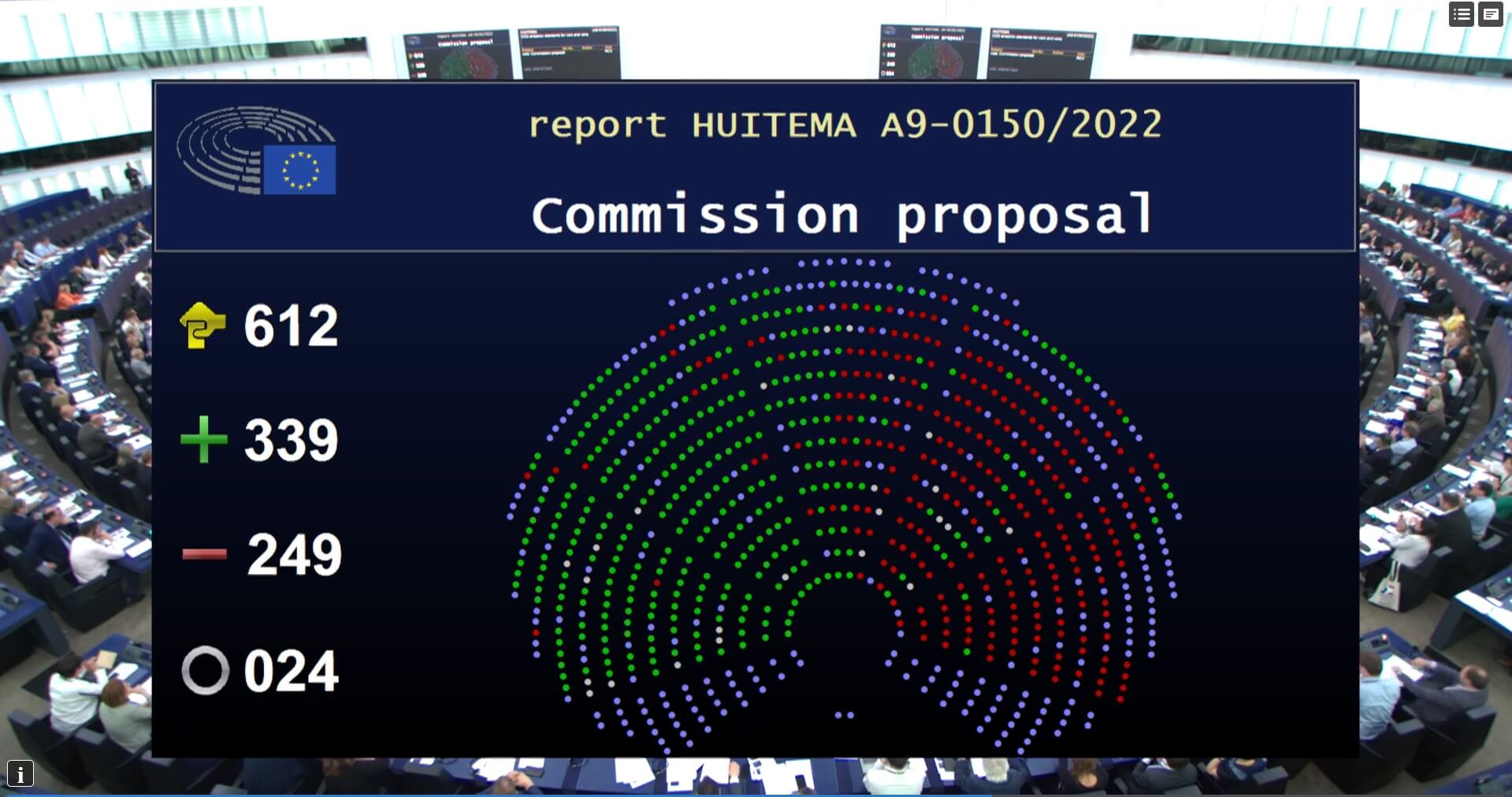
On 8 June the European Parliament voted, among other things, on two proposals forming part of the Fit for 55 package (more about the package itself can be found in our latest report):
- The amendment to Regulation (EU) 2019/631 setting CO2 emission standards for new passenger cars and for new light commercial vehicles, and
- The amendment to Directive 2003/87/EC on the emissions trading system (ETS).
The Emission Standards Regulation
The amendment to Regulation (EU) 2019/631, known in short as the “emission standards regulation”, sets out how quickly manufacturers will have to reduce the carbon dioxide emissions of the cars they sell on the European Union market in order to make effective progress toward the goal of the Union’s climate neutrality in 2050.
Until now, the commitment in force was that by 2030 manufacturers would have to cut the average CO2 emissions of the cars sold in a given year by 37.5% against the level of 95 g/km reached in 2021 – otherwise they face financial consequences. The regulatory pressure placed on manufacturers has in recent years brought rapid progress in bringing to market, by practically every manufacturer, electric cars and hybrids that make it possible to lower the average emission level of the cars sold.
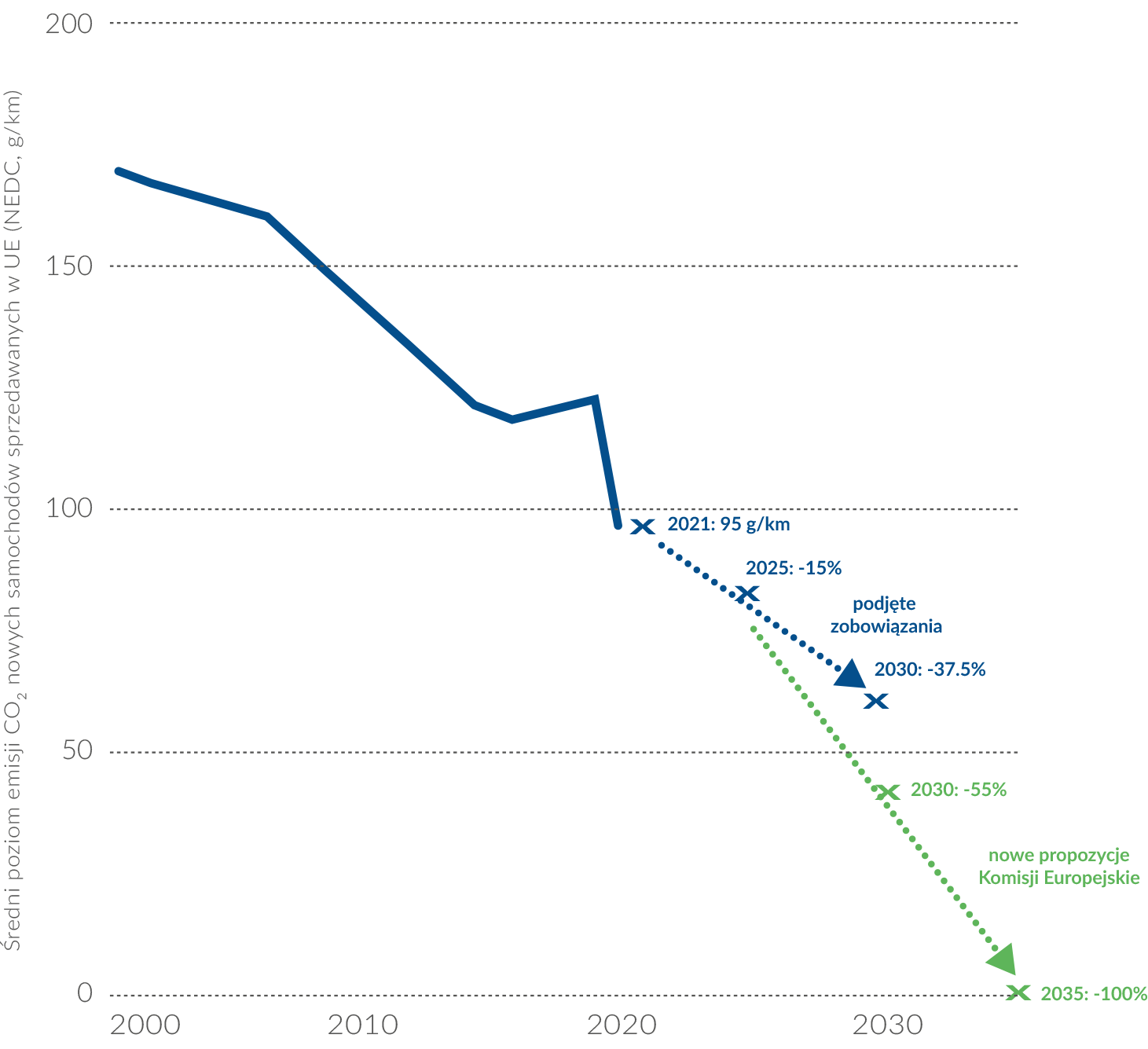
The European Commission’s proposal, backed by MEPs on 8 June, tightens these rules and sets a path to 2035. Under the new rules, the average level of carbon dioxide emissions from new cars in 2030 must fall not by 37.5%, but by 55% (by 50% for vans), and in 2035 – by 100%. Emissions are verified at the tailpipe, which means that if a car emits CO2 in any quantity at all, the manufacturer will pay a financial penalty. In practice this means that new cars powered by internal combustion engines will disappear from sale – this also applies to hybrid drivetrains. There will, however, be no restrictions on trade in used cars – which means that after 2035 a passenger car or van running on gasoline, diesel or gas will only be available on the secondary market or through individual import from outside the European Union.
The arguments put forward by supporters of this solution were based on the claims that:
- No car with a combustion engine is a genuinely zero-emission solution, and only zero-emission solutions guarantee that Europe will achieve climate neutrality, and
- Keeping the option of selling combustion cars in the European Union would take away manufacturers’ incentive to concentrate on developing the technology, the commercialization and the production of zero-emission cars, which would limit their supply.
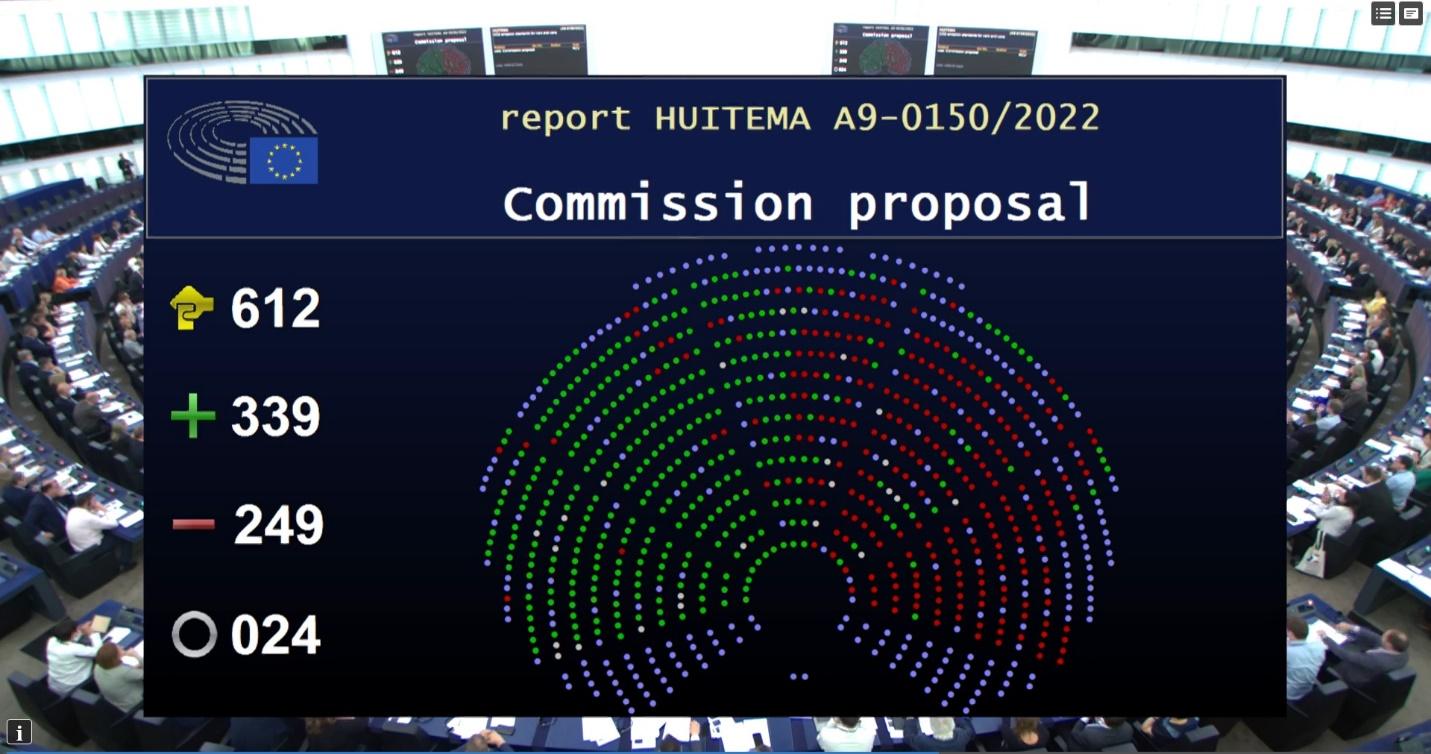
The Polish Liquefied Gas Organization, together with 102 other partners, appealed to MEPs to preserve the option of selling in Europe a pool of cars powered by internal combustion engines (through the demand for a 90% reduction in the average carbon dioxide emissions of the cars sold relative to the 95 g/km in force in 2021) and to allow cars running on renewable fuels that meet the requirements of the directive on the promotion of energy from renewable sources (RED) to be counted toward the zero-emission vehicle pool. MEPs did not accept our arguments and, by 339 votes to 249, de facto banned the sale in Europe of new combustion-engine cars after 2035.
In POGP’s view this will be an unfavorable solution for the market and for consumers, because:
- Exclusive market access for electric vehicles may in our view mean more limited access to cars, because:
> Demand for the raw materials needed to produce the batteries that power electric cars will, over a horizon of at least a decade, exceed production capacity, which today is located primarily in China,
> Hydrogen fuel cells, which could replace chemical batteries, are not yet available on a mass scale, and other industries, including power generation and the chemical industry, will compete with the automotive industry for the hydrogen used to power them.
- Consumers will lose the ability to choose the technology they prefer, one that matches needs arising from, among other things, where they live or how they use their car.
- Charging electric vehicles, assuming that the current market model is used, may become more expensive because of the need to expand the power grid so that it can supply a growing number of cars. This also applies to buyers who install charging points at home, unless they use their own renewable energy sources in order to reduce the cost of running the vehicle.
The Regulation, in the wording adopted by the European Parliament, will now go to trilogue negotiations between the Parliament, the Council of the European Union (that is, the Member States represented by their national governments) and the author of the proposal, the European Commission. The final shape of the Regulation will be known once these negotiations conclude, most likely in the second half of the year.
The Amendment to the ETS Directive
The amendment to Directive 2003/87/EC on the emissions trading system (ETS), voted on in the European Parliament on 8 June, is a very far-reaching reform of a system that has been in operation since 2005. From our perspective, the most important element is the proposal to bring road transport and buildings into the ETS – this means that the price of transport fuels and heating fuels would be burdened with an additional charge tied to the purchase of allowances for the CO2 generated by burning them. The European Commission proposed capping the cost of these allowances in the transport and buildings sectors at EUR 50 per ton of carbon dioxide emitted. More on the consequences of extending the ETS to these sectors can be found in a report by the Polish Economic Institute.
The European Commission’s proposal assumed that from 2025 the buildings and transport sectors would be covered by the obligation to purchase carbon dioxide emission allowances. In the course of the parliamentary work, however, opponents of this solution were very strongly represented – above all European conservatives and Christian democrats and the countries of Central and Eastern Europe – who fear the potentially negative effects of the proposed solution on citizens’ cost of living.
At the request of the dominant liberal group, a compromise solution was put forward that would extend the ETS from 2025 to commercial buildings and transport fleets, excluding individual users. Under this compromise, residential buildings and private cars would be covered by the cost of emission allowances only in 2029. As a result, running cars powered by internal combustion engines would become more expensive across the entire European Union – according to POGP estimates, with fuel costs charged at EUR 25 per ton of CO2 and an exchange rate of PLN 4.50/EUR, the cost of autogas would rise by around PLN 0.20 per liter.
During the plenary vote on 8 June, however, there was a surprise – with the votes of an exotic coalition of the Greens and the socialists (who back a tighter ETS) and the right (opposed to climate policy), the compromise solution was rejected and sent back for further parliamentary work. Proposals closely tied to the emissions trading system were also taken off the agenda, including the Social Climate Fund financed from the system’s revenues.
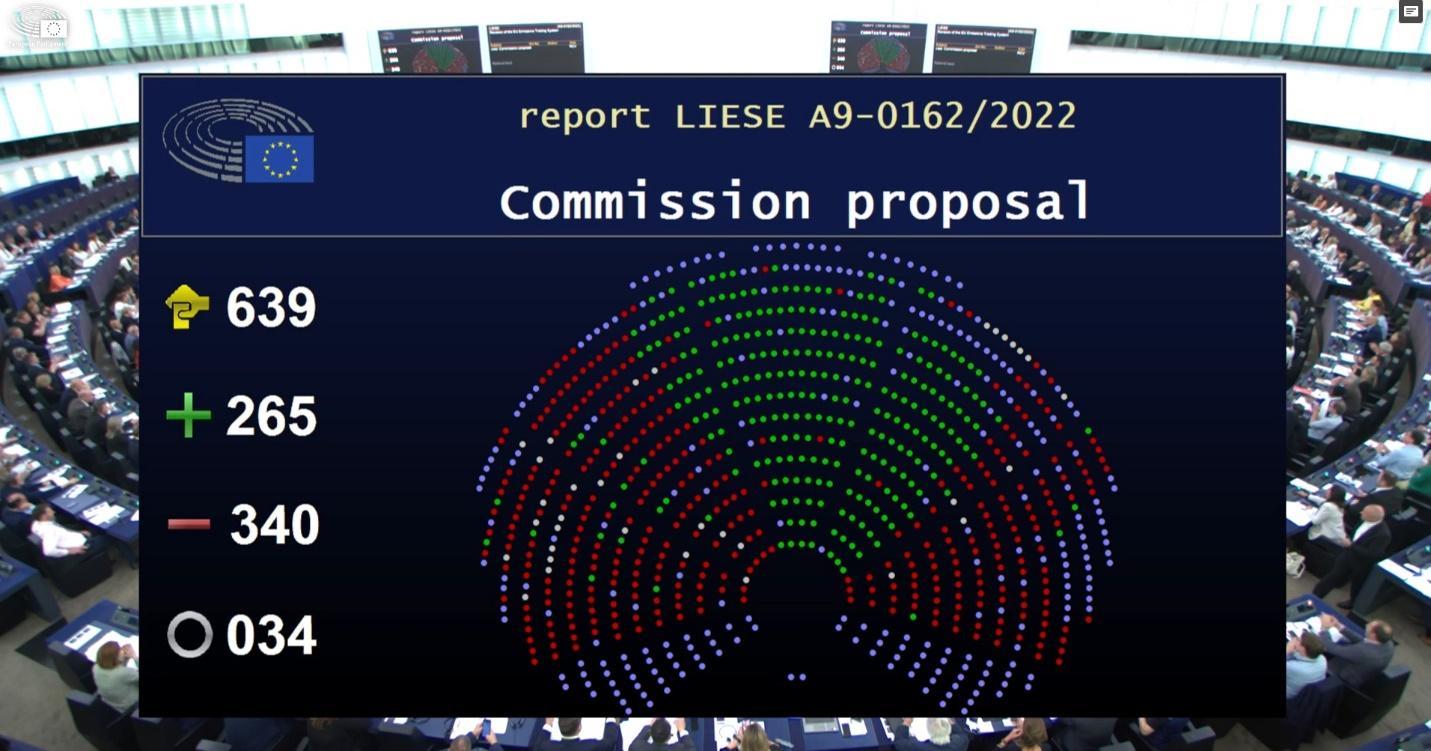
The rejection by MEPs of the amendment to the ETS Directive means, first, a delay in the legislative work in the European Parliament that the French presidency had intended to close by the end of June and, second, it shows how extraordinarily controversial a subject the increase in the financial costs of climate policy passed directly on to citizens remains. It is not clear how the final shape of the proposal will change, but the signal of growing concern about energy poverty and transport exclusion rang out loudly and legislators will find it hard to ignore.